
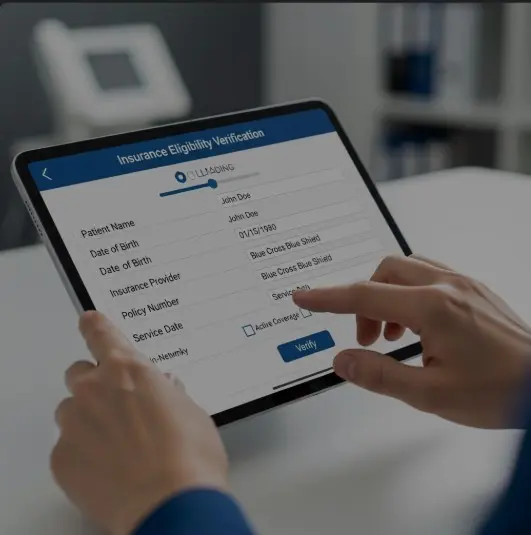
All About Insurance Eligibility Verification
Submitting a claim only to have it denied due to insurance issues is frustrating for both patients and providers. Many healthcare practices struggle with delayed payments and claim denials because they skip or mishandle insurance eligibility verification.
Understanding what insurance eligibility verification is and how to implement it effectively can save your practice time, reduce billing errors, and improve cash flow. In this guide, we’ll break down the verification process, common mistakes, tools, benefits, and best practices so your practice can operate efficiently while enhancing the patient experience.
What is Insurance Eligibility Verification?
Definition and Overview
Insurance eligibility verification is the process of confirming a patient’s insurance coverage before providing medical services. It ensures that a patient’s plan is active and covers the intended treatment, minimizing the risk of claim denials.
Healthcare providers typically verify several key details:
-
Type of insurance: commercial, Medicare, Medicaid.
-
Coverage specifics: services covered, co-pays, deductibles.
-
Prior authorization requirements.
-
Limitations or exclusions on treatments.
By conducting this verification, providers can make informed decisions about patient billing and avoid costly mistakes.
Why Insurance Eligibility Verification Matters
Proper verification has multiple benefits:
-
Reduces claim denials and billing delays: Accurate verification ensures claims are submitted correctly the first time.
-
Keeps patients informed: Patients understand their financial responsibilities upfront, preventing surprise bills.
-
Improves practice cash flow: By reducing denied claims, practices can increase timely reimbursements and operational efficiency.
How Insurance Eligibility Verification Works
Step-by-Step Verification Process
-
Collect patient information at registration: Gather insurance ID, personal details, and policy information.
-
Check coverage with the payer: Verify details using phone, online portals, or Electronic Data Interchange (EDI) systems.
-
Confirm benefits and requirements: Check co-pays, deductibles, and whether prior authorizations are needed.
-
Document and update records: Ensure patient files are updated for accurate billing and follow-up.
Tools and Methods for Verification
-
Online portals and EDI systems: Streamline verification and reduce manual errors.
-
Practice management software: Integrated systems automatically check coverage and update patient records.
-
Outsourced verification services: High-volume practices can partner with revenue cycle management companies to manage verification efficiently.
Benefits of Insurance Eligibility Verification
Minimize Claim Denials and Rejections
Real-time verification prevents incorrect claims from being submitted. Clinics that implement proactive checks often see a reduction in denials by 20–30%.
Improve Patient Experience
Patients who know their costs upfront are less likely to be frustrated by unexpected bills. Transparent communication builds trust and loyalty.
Optimize Revenue Cycle Management
Timely verification speeds up claim submission and reimbursement. Practices experience fewer accounts receivable days and better overall financial health.
Common Challenges and Mistakes in Insurance Eligibility Verification
Incomplete or Incorrect Patient Information
Missing insurance IDs or outdated policies can delay verification and lead to denied claims.
Failure to Verify Prior Authorizations
Certain procedures require pre-approval; failure to verify can result in claim rejections.
Relying on Manual Verification Only
Manual checks are time-consuming and prone to human error. Automated tools or integrated software increase accuracy and efficiency.
Best Practices for Effective Insurance Eligibility Verification
Verify Coverage Before Every Visit
Even returning patients’ insurance coverage may change. Verifying each visit ensures billing accuracy.
Use Technology and Automation
Integrate electronic health records (EHR) and practice management systems with verification features to streamline workflow.
Train Staff and Standardize Procedures
Front-desk and billing staff should follow clear standard operating procedures (SOPs) to reduce errors and ensure consistency.
Communicate Costs to Patients Clearly
Inform patients about co-pays, deductibles, and out-of-pocket responsibilities upfront to enhance satisfaction and trust.
Examples of Insurance Eligibility Verification in Action
Clinic Case Study
A multi-specialty clinic implemented automated eligibility checks and reduced claim denials by 30%, resulting in faster reimbursement and improved revenue cycle efficiency.
Patient Experience Improvement
Patients received accurate co-pay information and avoided surprise bills, leading to higher satisfaction scores and increased patient loyalty.
How to Start Implementing Insurance Eligibility Verification in Your Practice
-
Integrate verification into patient registration workflow: Make it a routine part of intake.
-
Adopt verification tools or partner with outsourced RCM services: Automation improves accuracy and saves staff time.
-
Train staff on SOPs and compliance requirements: Ensure HIPAA compliance and reduce errors.
-
Monitor key metrics: Track claim denial rates, accounts receivable days, and patient satisfaction to measure effectiveness.
Conclusion: Ensuring Financial and Operational Health Through Insurance Eligibility Verification
Insurance eligibility verification is essential for smooth revenue cycle management, patient satisfaction, and overall practice efficiency. By understanding the process, implementing best practices, and using technology effectively, healthcare providers can reduce claim denials, improve cash flow, and build stronger patient relationships. Prevent claim denials and accelerate reimbursements learn how our Eligibility Verification service can help at AAAMB Eligibility Verification.