
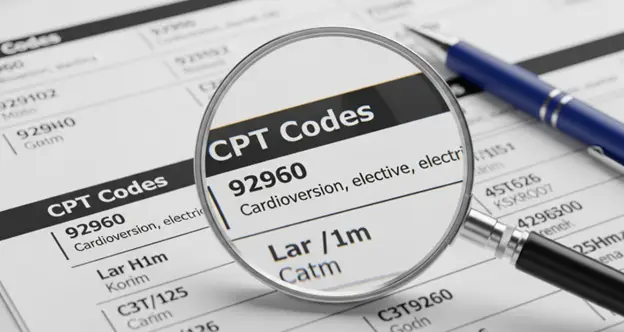
Cardioversion is a common procedure used to restore normal heart rhythm in patients with arrhythmias such as atrial fibrillation or atrial flutter. However, from a medical billing and coding perspective, selecting the correct CPT code for cardioversion is critical for accurate reimbursement, compliance, and avoiding claim denials. This complete guide explains cardioversion CPT codes, ICD-10 codes, billing steps, documentation requirements, and common mistakes all in one place.
CPT Code for Cardioversion – Short Answer
The primary CPT code for cardioversion is:
- 92960 – External electrical cardioversion (elective)
- 92961 – Internal cardioversion
These codes are used depending on whether the cardioversion is performed externally using defibrillator pads or internally using catheters.
Quick Billing Summary Table
| Procedure Type | CPT Code | Description |
| External Electrical Cardioversion | 92960 | External synchronized cardioversion |
| Internal Cardioversion | 92961 | Internal cardioversion via catheter |
| Cardioversion with TEE | 92960 + TEE code | When TEE performed before cardioversion |
| Chemical Cardioversion | No specific CPT | Billed using E/M services |
Important: Chemical cardioversion does not have a specific CPT procedure code and is typically billed using evaluation and management (E/M) codes.
What Is Cardioversion? (Medical and Billing Perspective)
Cardioversion is a medical procedure used to restore a normal heart rhythm in patients experiencing arrhythmias such as atrial fibrillation, atrial flutter, or supraventricular tachycardia.
From a medical billing perspective, cardioversion must be coded correctly based on:
- External vs internal procedure
- Elective vs emergency procedure
- Whether sedation was used
- Whether TEE was performed
- Whether critical care was provided
Types of Cardioversion Procedures
Electrical Cardioversion
Electrical cardioversion uses synchronized electric shocks delivered through pads placed on the chest to restore normal rhythm.
Chemical Cardioversion
Chemical cardioversion uses antiarrhythmic medications such as amiodarone or adenosine to restore rhythm.
Internal Cardioversion
Internal cardioversion is performed using catheters placed inside the heart, typically in electrophysiology labs.
Emergency vs Elective Cardioversion
- Emergency cardioversion – performed in ER for unstable patients
- Elective cardioversion – scheduled procedure for stable arrhythmia patients
Why Accurate Coding for Cardioversion Is Important
Accurate coding is critical because cardioversion billing is often audited. Incorrect coding may result in claim denials or compliance issues.
Key reasons coding matters:
- Proper insurance reimbursement
- Avoid claim denials
- Maintain compliance with billing regulations
- Ensure documentation supports billed services
- Prevent audit risks
CPT Code for Cardioversion (Complete Code List)
CPT Code for Cardioversion – External Electrical Cardioversion
CPT Code 92960 is used for external electrical cardioversion.
Definition: Elective external electrical cardioversion used to convert arrhythmia to normal sinus rhythm.
When to Use
Use CPT 92960 when:
- External defibrillator pads are used
- Procedure is synchronized
- Used for atrial fibrillation, atrial flutter, SVT
- Procedure is elective or planned
Documentation Requirements
Documentation should include:
- Indication for cardioversion
- Rhythm before procedure
- Sedation used
- Energy level used
- Number of shocks
- Rhythm after procedure
- Patient response
Billing Tips
- Sedation may be billed separately
- TEE may be billed separately if performed
- Do not bill defibrillation with cardioversion
- Ensure documentation supports elective procedure
CPT Code for Internal Cardioversion
CPT Code 92961 is used for internal cardioversion procedures.
When Internal Cardioversion Is Performed
Internal cardioversion is typically performed:
- During electrophysiology studies
- When external cardioversion fails
- Using intracardiac catheters
Coding Guidelines
- Used only for internal cardioversion
- Usually performed in EP lab
- Often billed with electrophysiology procedures
Common Billing Mistakes
- Using 92960 instead of 92961
- Billing internal cardioversion separately when bundled
- Missing procedure documentation
Cardioversion With Transesophageal Echocardiography (TEE)
TEE is often performed before cardioversion to check for blood clots.
When TEE Is Billed Separately
TEE may be billed separately when:
- Performed before cardioversion
- Separate documentation exists
- Separate medical necessity documented
Bundling Rules
TEE and cardioversion are not always bundled, but documentation must clearly show separate procedures.
Modifier Usage
Common modifiers:
- Modifier 26 – Professional component
- Modifier 59 – Separate procedure
- Modifier 25 – E/M same day
Medical Billing Process for Cardioversion
Step 1 – Verify Medical Necessity
Ensure documentation shows:
- Arrhythmia diagnosis
- Failed medication therapy
- Symptoms requiring cardioversion
Step 2 – Select Correct CPT Code for Cardioversion
Choose:
- 92960 for external cardioversion
- 92961 for internal cardioversion
Step 3 – Assign ICD-10 Diagnosis Code
Common diagnosis codes include:
- Atrial fibrillation
- Atrial flutter
- Supraventricular tachycardia
- Cardiac arrhythmia
Step 4 – Check Bundling and Modifiers
Verify:
- TEE bundling
- Sedation billing
- Critical care billing
- Modifier usage
Step 5 – Submit Claim
Submit claim with:
- CPT code
- ICD-10 code
- Modifiers
- Documentation
Step 6 – Handle Denials and Resubmissions
Common denial reasons:
- Missing documentation
- Incorrect CPT code
- Medical necessity not documented
- Bundling errors
CPT Code Comparison Table for Cardioversion
| Procedure Type | CPT Code | Description | When Used | Notes |
| External Electrical Cardioversion | 92960 | External synchronized cardioversion | Elective arrhythmia | Most common code |
| Internal Cardioversion | 92961 | Internal cardioversion via catheter | EP lab procedures | Less common |
| Chemical Cardioversion | E/M codes | Medication conversion | ER or inpatient | No specific CPT |
| Cardioversion with TEE | 92960 + TEE | Cardioversion with echocardiography | Check for clots | May need modifier |
CPT Code for Cardioversion With Critical Care Billing
When Critical Care Can Be Billed With Cardioversion
Critical care may be billed when:
- Patient unstable
- Life-threatening arrhythmia
- Requires intensive monitoring
- Critical care time documented
Documentation Requirements
Documentation must include:
- Critical care time
- Patient condition
- Life-threatening condition
- Interventions performed
Modifier Rules
Modifier 25 may be used when:
- E/M service performed same day
- Significant separately identifiable service
Common Billing Errors
- Billing critical care without time documentation
- Billing cardioversion bundled into critical care
- Missing modifier usage
ICD-10 Codes Commonly Used With Cardioversion
Atrial Fibrillation ICD-10 Codes
Common ICD-10 codes:
- 0 – Paroxysmal atrial fibrillation
- 1 – Persistent atrial fibrillation
- 2 – Chronic atrial fibrillation
- 91 – Unspecified atrial fibrillation
Atrial Flutter ICD-10 Codes
- 3 – Typical atrial flutter
- 4 – Atypical atrial flutter
- 92 – Unspecified atrial flutter
Arrhythmia ICD-10 Codes
- 9 – Cardiac arrhythmia unspecified
- 1 – Supraventricular tachycardia
Medical Necessity Diagnosis Guidelines
Insurance typically requires:
- Symptomatic arrhythmia
- Failed medication
- Hemodynamic instability
- Physician documentation supporting procedure
Documentation Requirements for Cardioversion Billing
Required Procedure Documentation
Documentation must include:
- Indication
- Consent
- Procedure note
- Outcome
Consent and Sedation Notes
Include:
- Patient consent
- Sedation medication
- Monitoring documentation
Rhythm Before and After Cardioversion
Documentation must show:
- Pre-procedure rhythm
- Post-procedure rhythm
- Success or failure
Energy Levels Used
Document:
- Joules delivered
- Number of attempts
Physician Notes Requirements
Physician documentation should include:
- Medical necessity
- Procedure details
- Patient response
- Follow-up plan
Common Cardioversion Billing Mistakes and How to Avoid Them
Common billing errors include:
- Wrong CPT code selection
- Billing cardioversion with bundled procedures
- Missing documentation
- Incorrect modifier usage
- Critical care billing errors
- ICD-10 mismatch errors
Avoid these errors by:
- Reviewing documentation
- Checking bundling edits
- Confirming medical necessity
- Using correct modifiers
- Matching diagnosis with procedure
FAQs About CPT Code for Cardioversion
What is the CPT code for cardioversion procedure?
The most commonly used CPT code for cardioversion procedure is 92960, which is used for external electrical cardioversion.
What is the difference between 92960 and 92961?
CPT 92960 is used for external cardioversion, while CPT 92961 is used for internal cardioversion performed using intracardiac catheters.
How do you bill cardioversion with critical care?
You may bill cardioversion separately from critical care if documentation supports critical care time and the procedure was separately identifiable.
What is the ICD 10 code for cardioversion?
There is no specific ICD-10 procedure code for cardioversion; instead, diagnosis codes such as atrial fibrillation or atrial flutter are used to justify medical necessity.
What is the CPT code used for an internal cardioversion?
Internal cardioversion is billed using CPT code 92961.
Can cardioversion be billed with sedation?
Yes, sedation may be billed separately if moderate sedation was provided and documented properly.
Is cardioversion bundled with emergency department visit?
Sometimes cardioversion may be bundled with ER services, but a separate E/M service may be billed with modifier 25 if appropriate.
Can cardioversion be billed multiple times on the same day?
Yes, if cardioversion is performed multiple times and documentation supports separate procedures.
Conclusion – CPT Code for Cardioversion Billing Summary
Understanding the correct CPT code for cardioversion is essential for accurate medical billing, reimbursement, and compliance. The most commonly used code is 92960 for external electrical cardioversion, while 92961 is used for internal cardioversion. Proper documentation, correct ICD-10 diagnosis codes, modifier usage, and understanding bundling rules are critical to avoid claim denials. Many medical billing professionals and organizations such as AAAMB also emphasize proper cardioversion coding guidelines to ensure accurate claims processing and compliance.
Billing Workflow Recap
- Verify medical necessity
- Select correct CPT code
- Assign ICD-10 code
- Check bundling and modifiers
- Submit claim
- Handle denials if necessary
Final Claim Approval Tips
- Always document rhythm before and after cardioversion
- Document energy levels and number of shocks
- Ensure medical necessity is clear
- Use correct modifiers
- Avoid bundled billing errors
By following proper coding guidelines, documentation standards, and billing workflows, healthcare providers and medical billers can ensure accurate reimbursement and reduce cardioversion claim denials.